

How to care for collectible dolls: complete collector guide
Learning how to care for collectible dolls properly protects their surfaces, helps preserve their value, and keeps every handcrafted detail intact. This guide covers cleaning, storage, display, and prevention across the main materials found in collectible dolls.
How to care for collectible dolls by material and storage
Every collectible doll tells its story through material and construction. That is the detail that makes the difference: before any attempt to clean, identify the composition, because a method that suits a vinyl doll can damage bisque dolls, wax, or older composition dolls beyond repair.
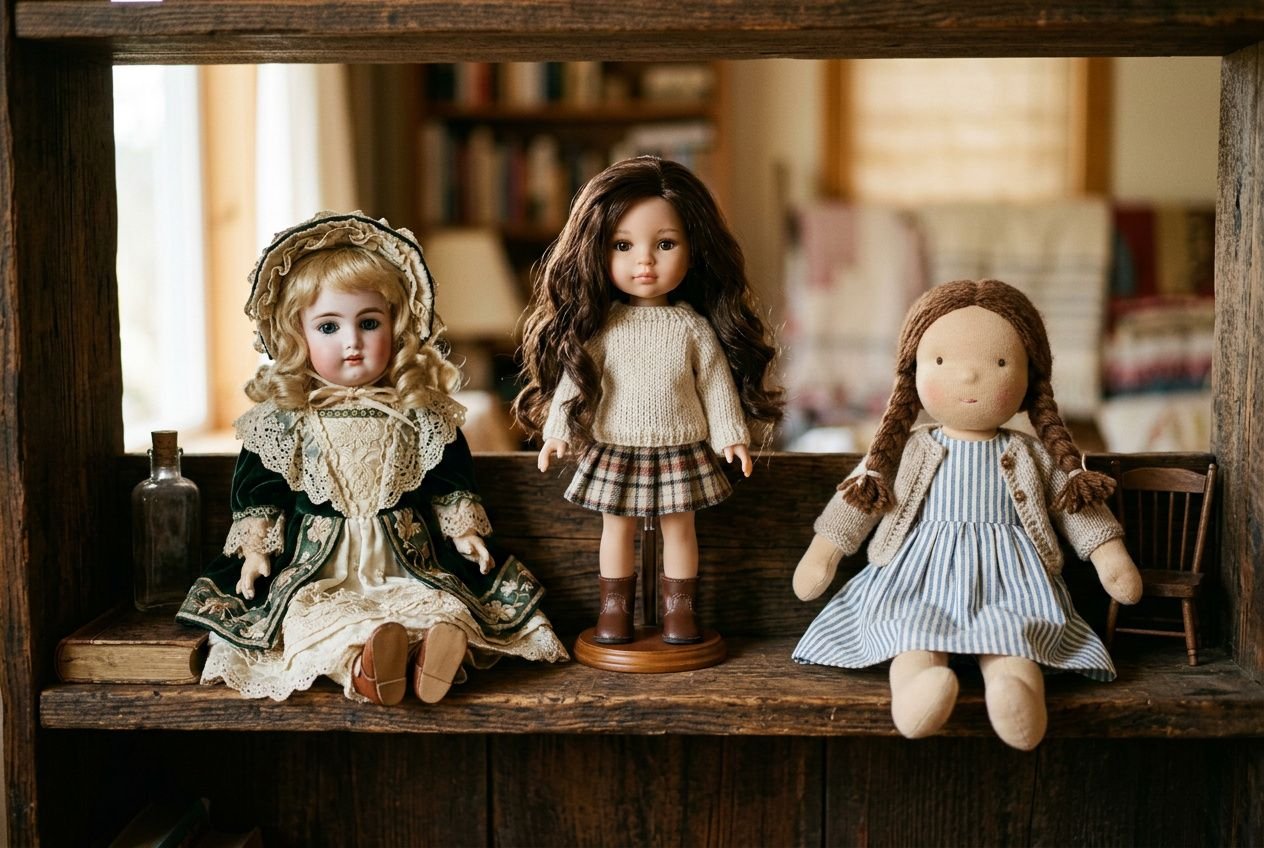
Identifying your doll's material before any care
Understanding composition is the basis of how to care for collectible dolls for beginners. Porcelain, bisque dolls, vinyl, celluloid, wax, wood, and soft cloth bodies all react differently to moisture, temperature, handling, and humidity, so proper care starts with the material rather than the stain or dust being treated.
A reliable point of reference remains the doll care guide associated with Faith Eaton. Her research is still worth looking for when identifying materials and choosing methods that preserve original finish, clothing, and joints.
- Porcelain and bisque: never submerge in water; support the body rather than pulling at limbs, as older joints or stringing can weaken over time; gloves help prevent skin oils transferring to the surface.
- Vinyl and hard plastic: clean with a soft cloth, mild soap, and minimal moisture; avoid soaking around eyes or joints; keep away from direct sunlight and other heat sources.
- Composition dolls and papier-mâché: dust only with a soft brush or dry cloth; moisture can cause swelling, paint loss, and cracks.
- Celluloid, wax, and tin: celluloid needs cool, ventilated storage; wax should be kept well away from heat; tin benefits from stable conditions to avoid lifting paint.
The table below brings together cleaning and storage priorities for each type, so the method follows the material rather than the stain.
| Material | Cleaning method | Key risk to avoid | Storage priority |
| Porcelain / Bisque | Damp lint-free cloth, distilled water, mild soap | Moisture, chips, hairline cracks | Acid-free tissue, acclimatise when moved |
| Vinyl | Soft cloth, baby shampoo | UV fading, heat warping | Away from sunlight and heaters |
| Composition / Wood | Dry soft brush only | Humidity, paint chipping | Dry, climate-stable location |
| Organic cotton | Damp cloth, mild detergent | Machine washing, heat on hair | Upright in original presentation box |
| Celluloid | Light dusting only | Heat, sealed enclosures | Cool, ventilated room |
Cleaning collectible dolls safely by material type
With the material identified, cleaning should stay simple and gentle. Anyone learning how to care for vintage dolls will quickly find that these pieces, especially bisque dolls made before the mid-20th century, should not be washed freely with water unless a specialist has assessed the finish.
For a modern vinyl doll, a suitable cleaner for vinyl dolls should be mild and free from harsh solvents: lukewarm water with a little soap, applied with a soft cloth or barely moistened cotton bud, is usually enough to clean the surface without dulling it. This is also the safest way to work around fingers, painted areas, and the edges of movable joints.
The guidance linked to the collectible doll care notes for the 47 cm Wandering Star model follows the same principle. Dust with a dry cloth and brush the hair lightly.
How to store and preserve vintage and antique dolls
After cleaning comes the long-term question of environment. Anyone researching how to preserve an old doll or how to keep dolls at home should focus on stable temperature, moderate humidity, and breathable wrapping, because these conditions help protect dolls far more effectively than frequent handling ever could.
For safe storage, wrap each piece in acid-free tissue or unbleached cotton and store it upright where possible, so bodies and joints are not compressed over time. Avoid plastic bags and sealed tubs for long periods: trapped moisture encourages mildew, affects clothing, and can damage composition, paint, and soft cloth bodies.
Attics, garages, and sheds are rarely suitable. A wardrobe, dresser, or interior room with steady conditions suits both antique dolls and newer cloth dolls, especially when original boxes are available.
The same principle applies to the organic cotton range shown in the collectible doll care notes for Milly: use a damp cloth for light marks, keep washing to a minimum, and care for clothes separately when needed.
Regular checks matter just as much as careful packing. Gently inspect stored pieces for small holes in clothes, signs of pests, early chips, loosening joints, or fine cracks, because catching problems early makes them easier to preserve.
Displaying collectible dolls at home without causing damage
In practice, maintaining condition on open shelves or in cabinets means limiting light, reducing dust, and supporting the body properly so stands do not strain joints.
Glass-fronted cabinets with LED lighting are often the safest domestic option, as they produce less heat than older bulbs. By contrast, direct sunlight can fade vinyl, yellow fabrics, and weaken older composition finishes surprisingly quickly.
Use a soft brush or soft cloth to remove loose dust from the surface, work around painted features gently, and take care around rooted or styled hair and delicate clothing.
The display advice linked from collectible doll care reflects that approach well: when pieces are not on show, store dolls in their presentation boxes to preserve condition and help protect dolls from light and dust.
Frequently asked questions
Can I use any household cleaner on a vinyl doll?
No. Household cleaners with solvents, bleach, or abrasive agents can harm a vinyl doll and other crafted pieces by marking the surface or weakening joints over time.
For routine care, use lukewarm water with a little mild soap or baby shampoo: apply it with a soft, lint-free cloth and keep the touch gentle. For a more stubborn mark, a cotton bud allows a precise clean without spreading moisture across the surrounding area.
Is it safe to store antique dolls in a sealed plastic container?
It is not recommended. Sealed plastic containers hold in moisture, and that raises the risk of mildew, especially with antique dolls or fabric-bodied examples.
Safer storing starts with breathable layers: acid-free tissue paper or calico, then a muslin bag. From there, a closet or trunk offers the stable temperature a sealed container cannot.
Small gaps for airflow or silica gel packs are worth looking for when extra moisture control is needed.
How do I care for the hair on a collectible doll without damaging it?
Hair care follows the fibre: bonded acrylic fibre and hand-knotted human hair each call for a different level of handling. In both cases, use a wide-tooth comb and work from the ends upwards with slow, gentle strokes to prevent snagging.
Heat is the main risk. Blow-drying and heated tools should be avoided on synthetic hair and acrylic fibre wigs, as they can cause permanent frizzing and fibre damage.
Keeping the doll upright in its original presentation box reduces friction and protects the finish between displays.
Recommended products


Share this article:


Similar posts

Collectible dolls for beginners: your complete starter guide
Discover how to start collecting dolls with our beginner's guide. Learn about vinyl collectible dolls, top brands, budgets, and where to find them locally.

How to store dolls: the ultimate doll storage guide
Learn how to store dolls properly, from baby dolls to collectibles. Discover expert tips on display, collection care, and storing dolls long term safely.