

How to store dolls: the ultimate doll storage guide
This guide covers the essentials: environment, wrapping, display, and routine care, with a focus on long-term preservation.
How to store dolls properly for long-term preservation
The starting point is always the materials. Dolls have been made in clay, wood, ivory, porcelain, bisque, rubber, celluloid, and modern plastics, and each surface responds differently to light, humidity, and handling.
Knowing a doll’s composition is the detail that makes the difference, especially when identifying older types before deciding how best to protect and store them. A useful starting point remains this doll storage guide.
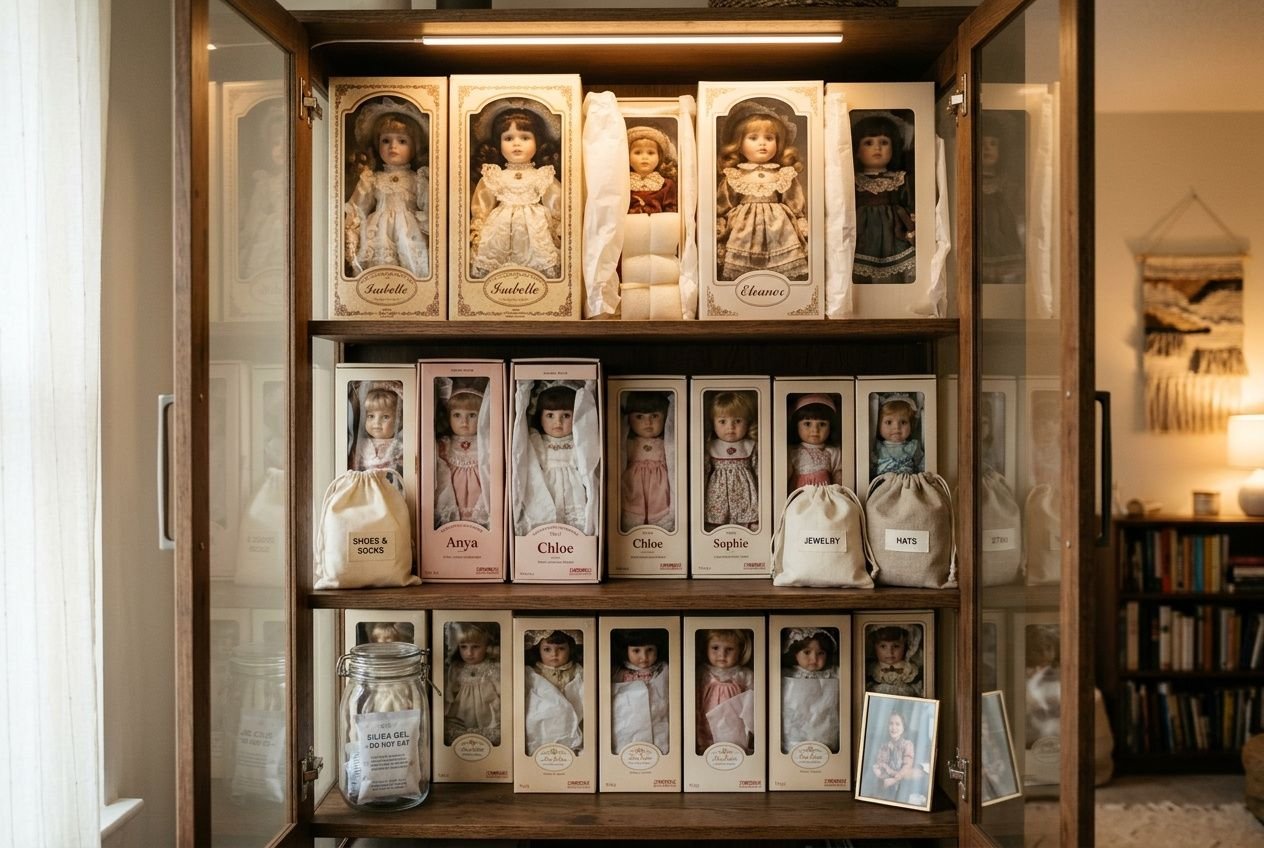
Choosing the right environment for doll storage
Once the materials are clear, the room comes next. Good doll storage depends on stable conditions: temperature control between 15–25°C and humidity at 40–60% help prevent warping, yellowing, sticky finishes, and strain in joints.
Interior cupboards, wardrobes, and cabinets are usually safer than lofts, garages, or sheds. Those harsher spaces tend to bring sharp fluctuations in heat and moisture, which can damage surfaces, loosen construction, and affect clothing as well as the doll itself.
In practice, silica gel packets can help inside a cabinet or storage box when a room is prone to damp. Even so, they support stable conditions rather than replace them.
Best wrapping and container materials by doll type
From there, wrapping matters just as much as location. If the aim is to store dolls safely, breathable acid-free materials are far better than sealed plastic, which traps moisture and accelerates deterioration.
Use tissue paper, unbleached cotton muslin, and other acid-free materials to cushion surfaces gently. Newspaper should be avoided: ink transfer and acidity can mark delicate finishes, especially on porcelain, bisque, and early composition elements.
Each doll benefits from individual wrapping, with added support around vulnerable areas such as the head, hands, and feet. The right choice depends on the material, but a well-padded doll storage box should hold each piece securely, free of compression or movement.
Positioning and organising dolls for long-term care
Store dolls upright whenever possible, ideally in an original presentation box or a well-fitted doll storage box, because this reduces pressure on joints, stuffing, and shaped clothing.
To protect textile areas, sleeves and bodices can be lightly padded with acid-free tissue paper. This helps maintain shape and limits creasing, a piece worth considering when the storage arrangement is intended for long-term preservation rather than quick access.
For display, acrylic risers or museum putty can steady dolls on shelves without adding stress to the structure. Alongside this, each storage box should be stacked with care: heavier containers belong at the bottom, and nothing weighty should rest directly on top of doll storage boxes kept in cupboards or cabinets.
Storing dolls in a playroom and organising a collection
A well-organised playroom makes dolls easier to enjoy and easier to protect. The same principles used in a collector’s display work just as well in family spaces: clear categories, breathable coverings, and a consistent place to store dolls after play. Regular checks matter too: look for pests, small cracks, or loose joints before minor issues affect the collection over time. For further guidance, see this doll storage guide.
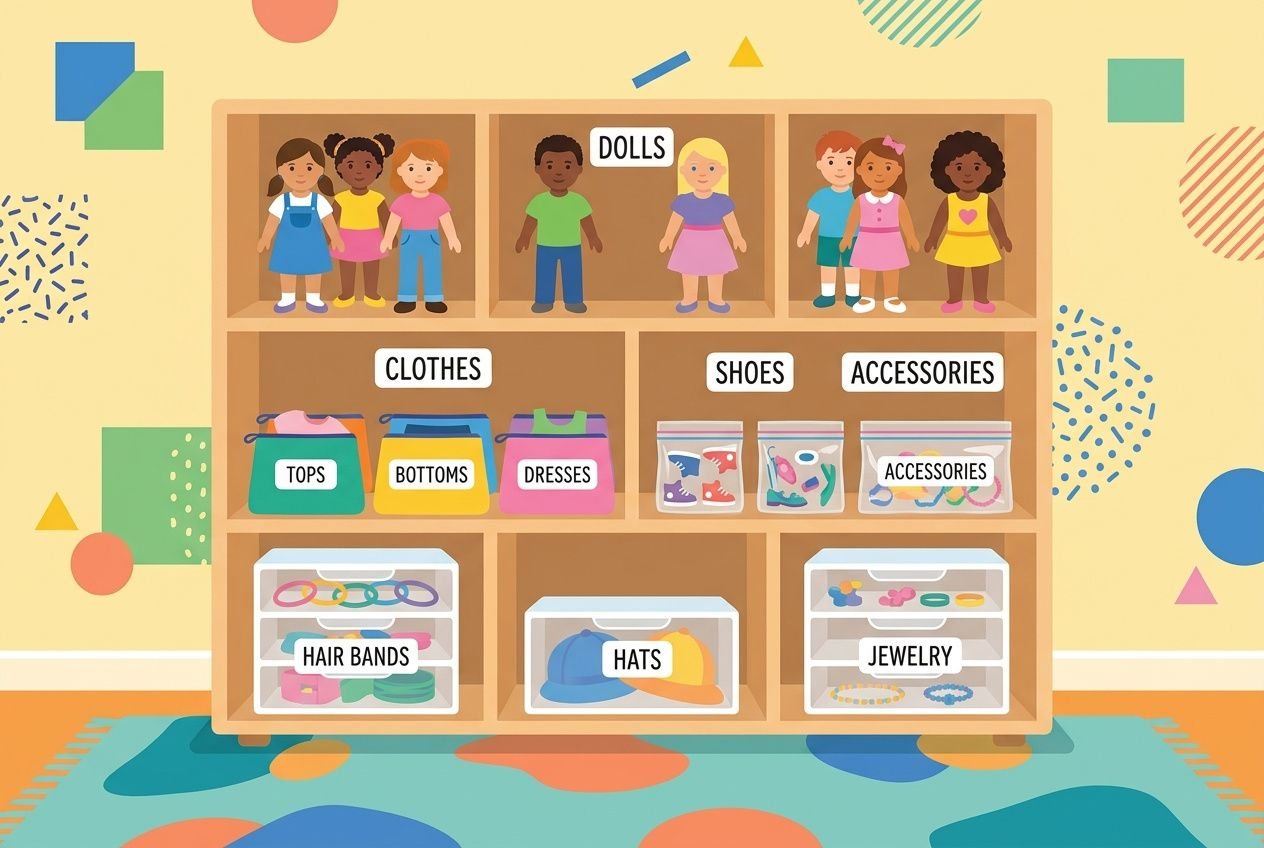
Practical playroom storage ideas for dolls and accessories
When considering how to store dolls in playroom settings, the balance between easy access and sensible protection shapes every decision: clear drawer units at child height help children return each piece safely, while labels keep accessories in order and make the whole display easier to manage.
- Clear drawer units: Place them at child height so dolls can be taken out and put back with less dropping or rough handling.
- Compartmentalised boxes: Use divided containers or small bags for shoes, jewellery, and other accessories to prevent tangling and loss.
- Tissue paper layering: Add tissue paper between fashion dolls stored in rows inside a storage box to reduce friction and protect painted finishes.
- Labelled inventory boxes: Keep a simple list on each box so it is easier to locate pieces without opening every part of the doll storage area.
Alongside this, breathable covers help protect from dust without trapping moisture. Cotton cloths or muslin are worth looking for when dolls are off display, especially in busy rooms where dust settles quickly into joints and rooted hair.
How to store baby dolls and reborn dolls safely
Once storage is arranged for general play, the same care applies to larger baby dolls and reborn pieces. For anyone asking how to store baby dolls, flat support is usually safer than a seated position: long periods upright can strain joints and compress cloth bodies, whereas soft blankets, Moses baskets, or prams spread weight more evenly.
From there, environment becomes the detail that makes the difference. Direct sunlight and nearby heat sources can soften vinyl and affect delicate painted features, so a cool interior space is better for storing. If available, climate-controlled storage offers the most stable conditions for long-term doll storage, particularly for a valued collection that is not always on display.
Cleaning, caring for doll clothes, and light protection
Good doll storage starts before anything goes into a cupboard or storage box. Each piece in a collection should be cleaned, fully dried, and packed with care, because trapped moisture is a common cause of mildew, paint damage, and fabric deterioration during long-term storage.
That matters even more with vinyl dolls, where the doll material and cleaning method need to suit the surface and joints. For material-specific guidance on how to store, clean, and pack them, these doll storage tips offer useful detail.
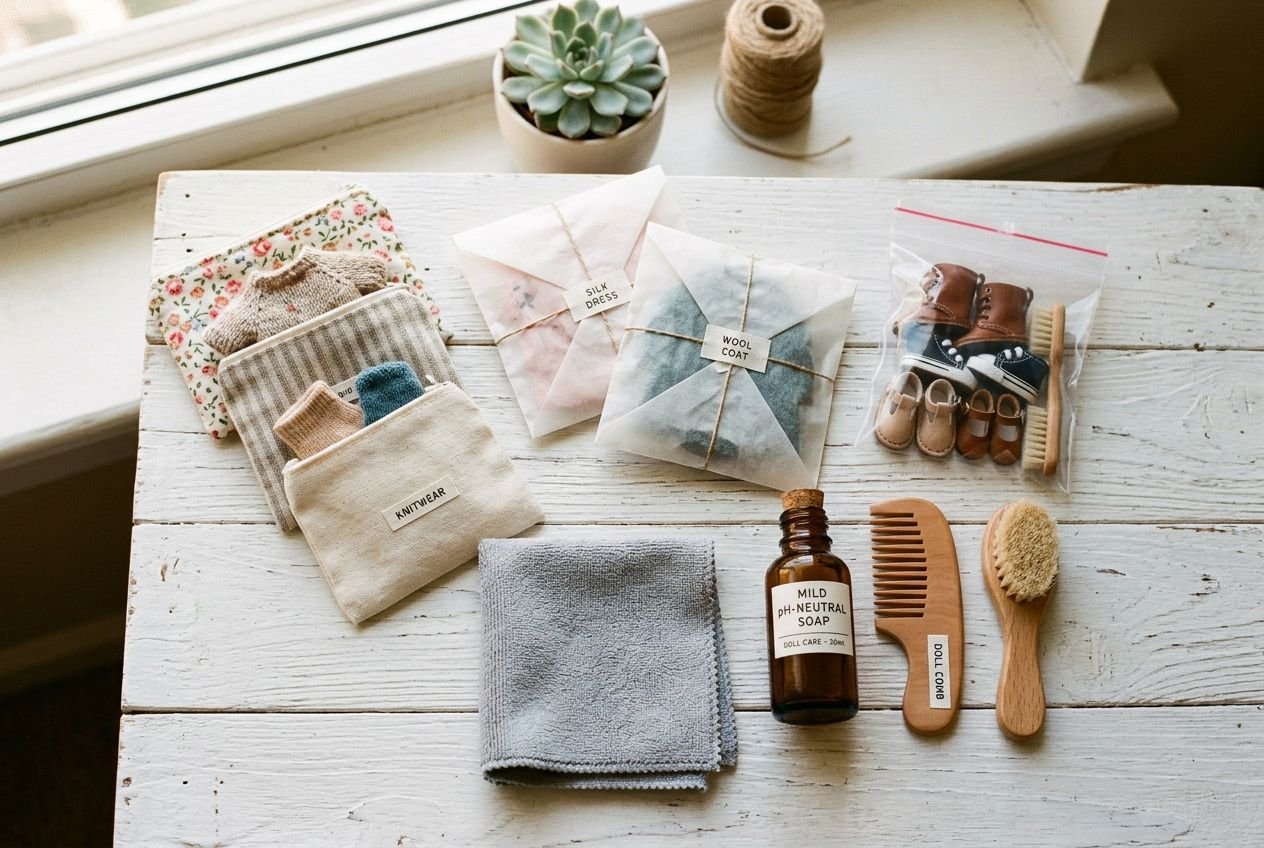
How to store doll clothes and accessories correctly
Once the dolls themselves are prepared, the same care should extend to clothes and accessories. Original garments and small pieces benefit from clean separation, protection from dust, and careful pairing with the dolls to which they belong.
In practice, outfits and small accessories are best kept separately in fabric pouches or acid-free containers, then stored alongside their corresponding dolls. That pairing is worth keeping: original clothes often matter greatly to the history and value of a collection.
- Fabric pouches: Use these for individual garments and small accessories to limit dust and prevent dye transfer between pieces.
- Acid-free padding: Place acid-free paper inside sleeves and bodices to help clothing hold its shape and reduce creasing during storage.
- Air-dry before storing: Wash delicate clothes by hand with mild dish soap in warm water, then leave them to dry completely before packing for archival storage.
Machine drying is rarely suitable. It can shrink clothing and leave residual moisture deep in the fibres, which is exactly what long-term storage should avoid.
Once dry, fold garments gently and place them in a breathable doll storage container or storage box with the related piece.
| Clothing type | Washing method | Storage method |
| Delicate fabric gowns | Hand wash, mild soap, warm water | Fabric pouch, acid-free padding inside bodice |
| Cotton play outfits | Hand wash, air dry fully | Folded in acid-free tissue, compartment box |
| Knitted or crocheted pieces | Hand wash, reshape while damp, air dry flat | Fabric pouch, stored flat to avoid stretching |
| Shoes and small accessories | Wipe with a damp cloth | Ziplock bag or divided compartment box |
Cleaning dolls before storage by material type
Once clothing has been dealt with, attention can turn to the doll itself. Matching doll material to its cleaning method matters most when a collection spans vinyl dolls, porcelain, bisque, and more fragile early materials.
Vinyl dolls can usually be cleaned with a microfibre cloth lightly dampened with distilled water. For marks that need more help, use a mild pH-neutral soap, but avoid soaking around the eyes or joints, where moisture may work its way inside.
By contrast, porcelain and bisque dolls should never be submerged. White cotton gloves help protect those porous surfaces from skin oils, and support should always come from the body rather than from the limbs.
Composition and papier-mâché pieces need a soft dry brush only, since any moisture can cause swelling and paint loss. Celluloid and wax dolls are best kept in cool, ventilated conditions away from heat, while electronic dolls should be stored with batteries removed to prevent corrosion.
Protecting dolls from light, pests, and long-term damage
Direct sunlight can fade clothes and hair, while strong light may yellow finishes over time; fluorescent tubes are particularly unhelpful when displaying certain plastics, as some vinyl dolls may develop a greenish cast.
A glass-fronted cabinet with LED lighting is often a piece worth considering for safer display. Place neutral LEDs above the display rather than at the side, and rotate the dolls on show so no single piece carries all the exposure.
Alongside this, pest checks should never be overlooked. Antique dolls with mohair or human-hair wigs deserve inspection before they enter the collection, and any piece showing signs of infestation should be isolated before it is returned to storage.
Good records also support better archival storage. Keep notes on origin, acquisition date, repairs, and condition on acid-free paper inside the storage box, and refer to vinyl doll materials for a clearer view of how composition affects composition stability, display conditions, and moisture risk over time.
Frequently asked questions
What is the best way to store dolls to prevent mould and moisture damage?
The safest approach to doll storage combines breathable wrapping with steady conditions. Use acid-free materials such as unbleached cotton muslin or tissue paper, and avoid sealed plastic bags: they trap moisture and encourage mildew.
From there, the room matters just as much. Store dolls in an interior space where humidity stays between 40–60% and the temperature remains between 15–25°C, ideally in a temperature-controlled area rather than an attic, garage, or basement where conditions shift quickly.
For longer-term care, archival storage is worth the effort: place each doll in a storage box with silica gel packets to help manage humidity.
How should dolls be stored in a playroom without damaging them?
In a playroom, clear organisation prevents most handling damage. Separate dolls from clothing and small accessories, and use drawer units at child height so pieces can be returned neatly rather than dropped or forced into place.
Once that system is in place, add gentle layers of protection. Place tissue paper between dolls stored in rows, keep tiny items in fabric pouches, and cover any pieces used for display with cotton muslin when they are not being handled to protect from dust.
Label each drawer or storage box clearly so children can store items without repeated unwrapping. The same principle applies when displaying pieces in a shared room, where practical access and protection need to work together.
Can vintage and collectible dolls be put on display safely, or is storage always preferable?
Display can be perfectly suitable for vintage pieces and other collectibles when the setting is well managed. A temperature-controlled room and a glass-fronted cabinet with LED lighting positioned above the dolls will reduce both heat and light exposure in practice.
Alongside this, rotating what is on display limits cumulative wear. For fragile examples, archival storage in a box lined with acid-free materials remains the sounder choice when long-term preservation is the priority.
The right choice depends on each piece: its material, age, condition, and any delicate clothing or accessories it still retains.
Share this article:


Similar posts

How to care for collectible dolls: complete collector guide
Learn how to care for collectible dolls, from cleaning porcelain dolls to storing antique dolls safely. Expert tips to preserve your treasured collection for years.
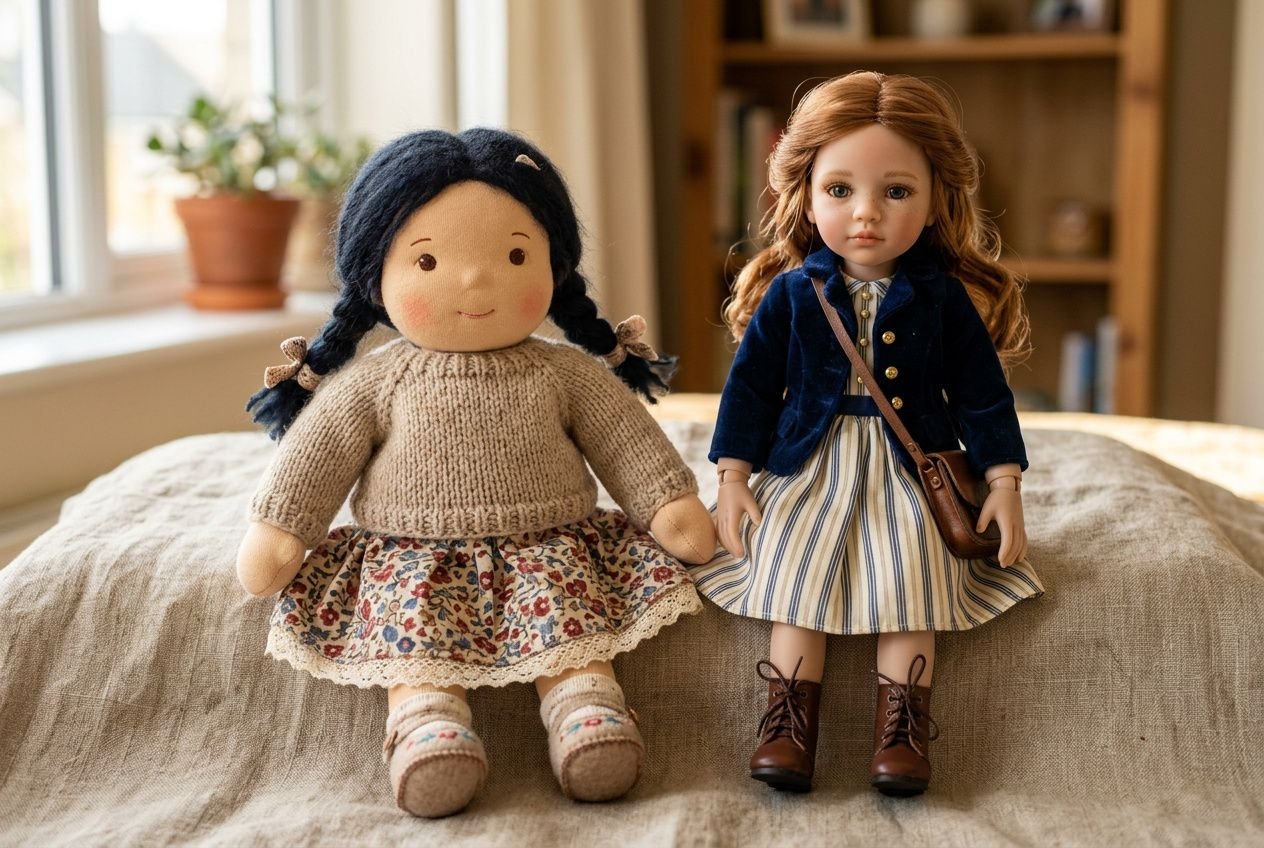
Vinyl doll or fabric doll collectible: a buyer's guide
Discover the difference between vinyl and fabric dolls. Compare materials, top vintage vinyl baby doll brands, prices & where to buy the best collectibles.