

Vinyl doll or fabric doll collectible: a buyer's guide
From sewn rag figures to moulded vinyl forms, the choice between a baby doll for play, a vintage piece for display, and a specialist collector item turns on material, construction, and intended use, each covered in turn below.
Vinyl or fabric baby doll collectible buyer's guide
The history of dolls traces a clear shift in materials: from sewn rag figures to carefully moulded vinyl forms. Both traditions remain important, and the detail that makes the difference is not simply appearance but feel, care, age suitability, and the kind of collecting each one invites.
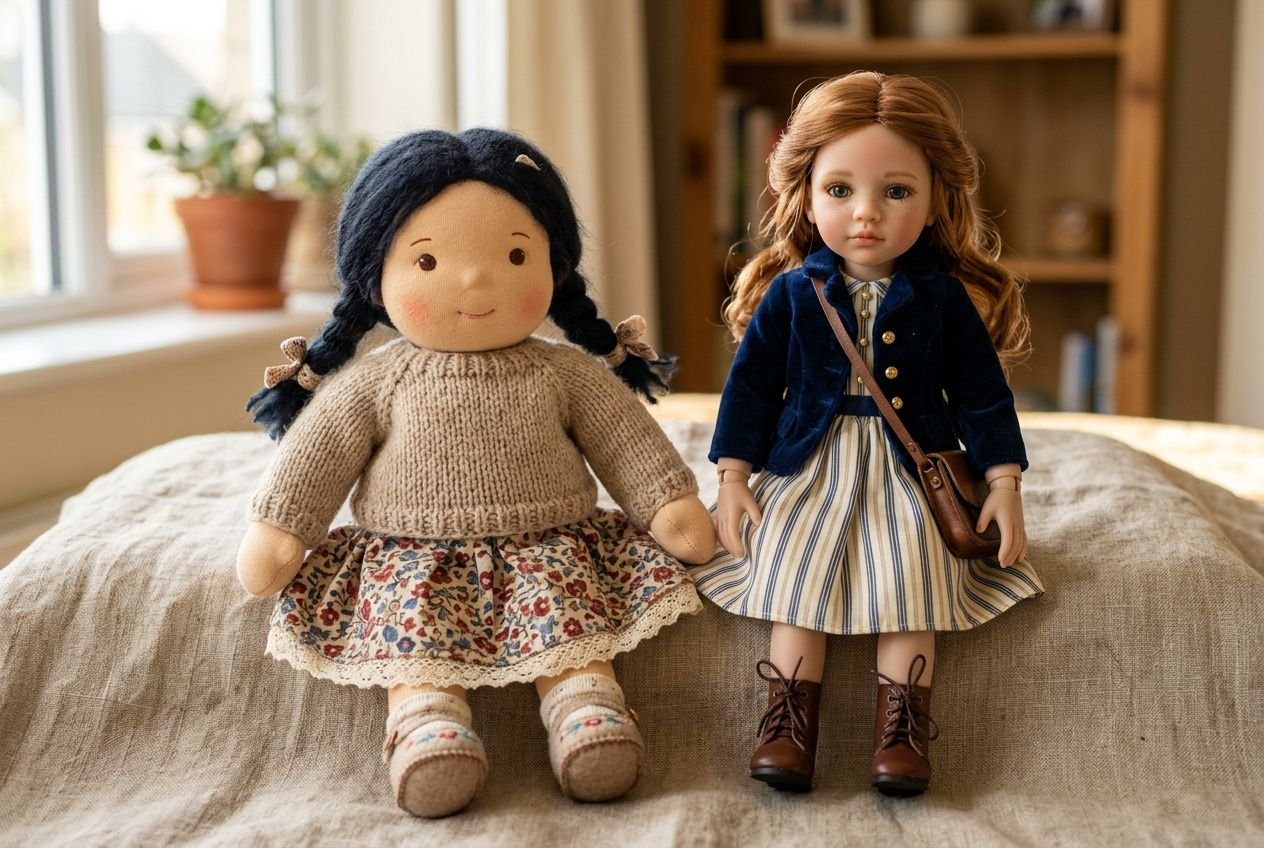
How to tell vinyl from cloth dolls by material and feel
The difference between vinyl and rag dolls starts at the surface: vinyl is smooth, slightly lustrous, and usually water-resistant, often with fine seam lines from moulding, while a fabric doll has a soft, matte exterior with stitched construction and printed or embroidered features rather than sculpted ones.
From there, a cloth body doll sits neatly between the two. This type combines a vinyl head and limbs with a soft torso, giving the realism of a vinyl baby doll with the cuddly feel many families and collectors appreciate.
Doll material vinyl or fabric: which suits your collector needs?
The difference between cloth and vinyl baby dolls is most obvious in touch and intended use. A fabric doll is often chosen for babies from birth to 18 months, while a vinyl girl doll or vinyl baby doll generally suits toddlers from 18 months to three years, as well as collectors looking for stronger sculptural definition.
- Surface texture Vinyl has a smooth, firm to slightly flexible finish shaped with precision; fabric offers a soft, textured surface that feels gentler in very young hands.
- Sculptural detail Vinyl allows for defined expressions, rooted hair, and articulated joints; cloth construction usually favours simpler features that leave more room for imaginative play.
- Maintenance A vinyl piece is usually cleaned with a damp cloth; a fabric doll needs gentler hand-washing and careful drying to preserve its shape and colour.
- Collector appeal Vintage vinyl examples from makers such as Effanbee and Pedigree attract strong interest, while fabric doll collecting often centres on craftsmanship, regional tradition, and heritage.
For anyone comparing doll material vinyl or fabric across age groups, the vinyl fabric dolls selection brings both approaches together, useful when touch, size, and construction all need to be weighed at once.
| Feature | Vinyl doll | Fabric / cloth doll |
| Surface feel | Smooth, firm, water-resistant | Soft, textured, matte |
| Facial detail | Sculpted, painted or rooted | Embroidered or printed |
| Age suitability | 18 months+ / adult collectors | 0–18 months |
| Maintenance | Damp cloth wipe | Gentle hand-wash |
| Collector market | Strong; vintage and reborn categories | Artisan craft and heritage focus |
| Price range (collectible) | £130–£700+ (vinyl); £700–£2,600+ (silicone) | Variable; antique pieces highly valued |
Top collectible vinyl brands and the reborn baby doll market
Fabric suits early sensory play and textile-focused collecting, whereas vinyl stands out for realism, durability, and scope for custom work. The right choice depends on the role the piece is meant to fulfil.
Alongside this sits the world of reborn dolls. A reborn baby doll is usually created from a vinyl reborn kit, then painted in layers with Genesis heat-set paints, fitted with rooted mohair, and weighted for a lifelike feel; collectors will note that vinyl reborn dolls have developed a substantial online following because they offer remarkable realism without the cost of a full silicone doll.
The collectible vinyl dolls in the Fashion Friends line show how artist-led design shapes modern collecting. Sculpted by Dianna Effner for Ruby Red in Hong Kong and standing 36 cm tall, characters such as Maya, Hanna, Stella, and Alex each have their own face sculpt, posable joints, character-specific outfit, and a wardrobe of interchangeable wigs and accessories.
Difference between cloth and vinyl baby dolls for gifts
Once you know the construction, gift selection becomes far simpler. The difference between cloth and vinyl baby dolls for gifting comes down to age, handling, and whether the recipient will cuddle, play with, or display the piece.
- For newborns to 18 months A fabric doll with minimal detailing supports sensory discovery and comfort without hard surfaces.
- For toddlers aged 18 months to three years A vinyl baby doll supports role play and nurturing games through more realistic facial and body modelling.
- For adult collectors Full-vinyl construction, named characters, and artist provenance can give a piece lasting appeal on display.
- For reborn enthusiasts Silicone babies offer the most skin-like feel, while vinyl reborn dolls usually provide a more accessible entry point into the category: typically 150-750 EUR for vinyl, compared with 850-3.000 EUR for a full silicone doll.
The vinyl doll materials guide covers full-vinyl forms, soft-body designs, fabric doll construction, and the care points worth looking for when choosing between any of these types.
The material that suits the purpose best, a soft baby doll for comfort, a textile-heritage vintage piece for display, or a vinyl reborn for lifelike presence, is ultimately the right starting point.
Frequently asked questions
What makes a vintage vinyl doll collectible and valuable?
A vintage vinyl piece becomes collectible through a mix of maker, condition, and rarity. Collectors will note that examples by Effanbee, Pedigree, Remco, and Eegee, produced between the 1960s and 1990s, are especially appreciated for their place in doll-making history and the quality of their finish.
Condition carries real weight: original clothing, intact rooted hair, and clear manufacturer markings can all strengthen the appeal of a vintage doll. Provenance matters too, particularly when documentation confirms where a piece came from and how well it has been kept.
Alongside this, restoration remains an established part of the field. Doll hospitals around the world repair and conserve cherished pieces, and many of their clients are adult collectors in their fifties and sixties preserving a baby doll for personal or financial reasons.
What is a reborn baby doll and how does it differ from a standard vinyl baby doll?
A reborn baby doll starts with a vinyl reborn kit and is then customised by an artist for a far more lifelike result than a factory-finished piece. The base may be fully vinyl or made as a soft-bodied form, bringing it close in feel to a cloth body doll while keeping the sculpted realism associated with reborn dolls.
The artistry is highly specific: layered Genesis heat-set paints create nuanced skin tones, while rooted mohair or human hair, weighting, veining, and mottling add realism in practice. By contrast, a standard vinyl baby doll keeps its original factory finish and character design, which often makes it easier to enjoy for both play and display.
Silicone babies sit in a separate premium category. They are valued for their especially soft, skin-like feel, but they typically cost three to five times more than comparable vinyl reborn dolls.
What is a cloth body doll and who is it best suited to?
A cloth body doll combines a soft fabric torso with vinyl limbs and a vinyl head. The result is a cuddly, lightweight companion that still keeps the facial definition and sculptural detail of a vinyl head.
The right choice depends on whether the priority is a soft, huggable torso or a uniformly sculpted finish across the whole piece. Once that distinction is clear, it becomes easier to match the construction to the setting in which the piece will be enjoyed.
That balance makes it particularly suitable for toddlers moving on from fully soft companions, and for collectors who value the tactile quality of a softly weighted piece. Alongside this, display goals, tactile preference, and intended use remain worth weighing when comparing soft-bodied pieces with fully vinyl reborn dolls.
Share this article:


Similar posts

How to store dolls: the ultimate doll storage guide
Learn how to store dolls properly, from baby dolls to collectibles. Discover expert tips on display, collection care, and storing dolls long term safely.

The psychology of doll collecting: why collectors love dolls
Explore the psychology of doll collecting, from Barbie dolls to vinyl figures. Discover why every doll collector finds joy, identity, and healing in the hobby.